
Breakthrough Breathwork© Facilitator Certification
Learn to guide a breathwork experience in your own voice.
A 12-week professional training with Veronica Lynn Clark
Predominantly online · Weekly live facilitation lab · $2,497
Breathwork is an opportunity to develop a deeper relationship with ourselves, to become curious about what we feel, what we hold in our bodies and how we respond to our experiences.
As a facilitator, you have the opportunity to guide people through that process of self-discovery. This requires an understanding of human behavior, the nervous system, the relationship between breath and emotion, and the importance of your own presence.
Through Breakthrough Breathwork©, I’ll teach you how to create intentional experiences that invite people into greater awareness of themselves. You’ll learn how to work with the breath, use music and language purposefully, recognize individual needs and adapt your facilitation accordingly.
You’ll also explore your own patterns, develop greater awareness of how you show up for others and discover your authentic voice as a facilitator.
My intention is to help you become a thoughtful, skilled and perceptive facilitator who understands the responsibility and possibilities of this work.
Imagine the first session you’ll lead
Maybe you teach yoga and want to offer a breathwork workshop of your own. Maybe you’re a coach who wants to know when bringing attention to the breath would serve a client. Or maybe you’ve been the person on the mat, opened your eyes afterward, and wondered how you could learn to do this for someone else.
Picture welcoming that first participant. You know how to explain what’s ahead in words they understand. You’ve chosen a practice for a reason. When they tell you something feels uncomfortable, you can pause, listen, and decide together what happens next. When the music ends, you know how to help them find their feet again.
Those skills can become part of individual sessions, group experiences, workshops, or retreats, within the scope of your professional role and the skills you’ve demonstrated. You can enter this training with a direction already in mind or use the twelve weeks to discover what kind of facilitator you want to become.
Inside the Breakthrough Breathwork© method
The session begins while people are still arriving. Someone may be sitting on their mat while part of their attention is still at breakfast or in the text conversation they just left. I invite them to feel the surface beneath them, let their eyes meet the light in the room, and notice who’s there with them. You’ll learn how to give people that time to arrive, including the person who wants to keep their intention private.
People need a way to reach you once the music starts. In my in-person classes, we rehearse a raised-fist signal before anyone lies down. With music playing and eyes covered, someone can ask for my attention without having to find the words. And if they lift their arms because a song moves them, I can give them that moment. You’ll learn to think through details like this for the setting you’re actually guiding.
Your voice can change what someone pays attention to. I use music to give people some privacy to make sound. I might return to a question they heard at the beginning or invite them to notice what they feel in their body. You’ll listen closely to how those choices land. Then you’ll practice choosing words that feel natural in your mouth and leaving enough quiet for a participant to hear their own answer.
The return deserves as much care as the beginning. Toward the end, I’ll often ask, “How am I in this moment?” Someone may have a word to share. Someone else may want to sit quietly or write. You’ll learn to make room for both and to close a session without deciding for another person what their experience meant.
Meet your teacher
Veronica Lynn Clark
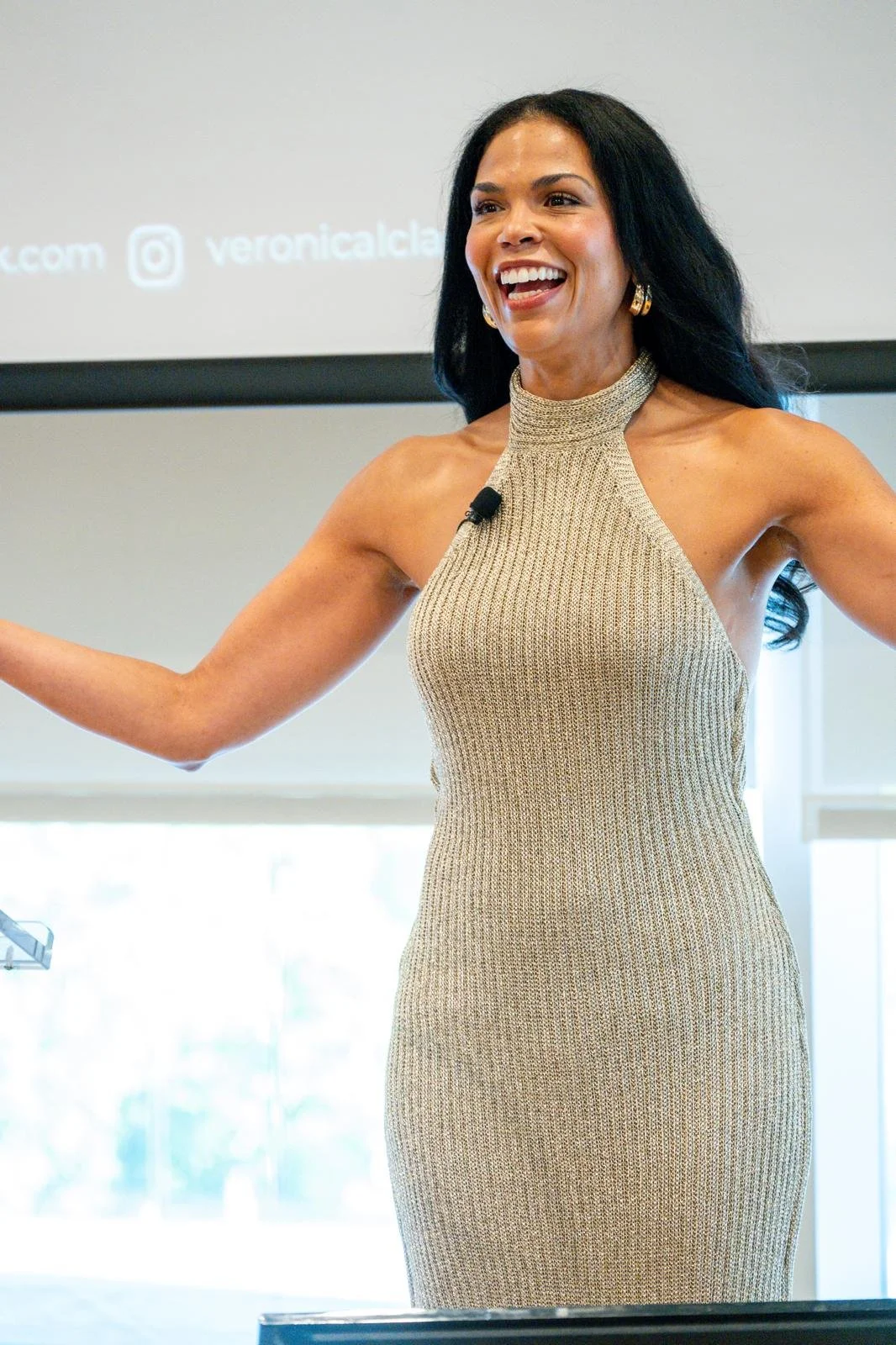
I’m a breathwork facilitator, Somatic Experiencing Practitioner, yoga and meditation educator, international keynote speaker, author, and relationship expert. Across that work, I keep coming back to a question: What becomes possible when we notice a pattern while we still have a choice about what to do next?
That question applies to the facilitator, too. When someone cries, do you immediately reach for a tissue? When the room gets quiet, do you feel responsible for filling it? Some of the most valuable work we’ll do together happens in the few seconds between what you notice and what you choose to do.
I hold a Master of Science in Adult Learning, a Bachelor of Science in Psychology, and an Advanced Graduate Certificate in Business. I designed this training so you can experience my facilitation, come back to a specific moment and ask me about it, then try it yourself with feedback. I want you to understand the work well enough to make a thoughtful choice even when your session goes somewhere mine didn’t.
Your twelve weeks
Understand the Breath. Understand Yourself.
Your first point of reference is your own experience. As you learn what changes when you change the way you breathe, you’ll also discover why another person can follow the same invitation and have an entirely different response.
Week 1 · The art of the opening
Experience how intention, orientation, and choice shape a Breakthrough Breathwork© session before the music begins. Discover what helps you feel ready to participate and how you’d welcome someone who needs something different.
Week 2 · What changes when the breath changes?
A participant asks, “Why does this feel so different from my normal breathing?” Follow the movement of the diaphragm and the exchange of oxygen and carbon dioxide. You’ll learn to explain active breathing, overbreathing, and breath holds in plain language, and to recognize when a practice needs to pause.
Week 3 · Listening to the nervous system
Two people go quiet. One feels settled. The other wants help. Learn to notice changes in breathing, movement, and attention, then ask a question that lets the participant tell you what you can’t know by looking.
Develop the Skills to Guide Others.
You’ll begin making the decisions a participant is trusting you to make. Which practice fits? What do they need to know before they agree? What will you do if their answer changes halfway through?
Week 4 · Choosing the breath for the person
Explore the breathing practices I use and the purpose each one serves. Learn how intention, readiness, and setting inform your choice, including when a gentler option or a different plan makes more sense.
Week 5 · The conversation before the music starts
Learn to ask screening questions with warmth and clarity, explain the experience honestly, and recognize when to defer or refer. A practical safety checkpoint gives you feedback on those decisions before you guide an approved practice participant.
Week 6 · Making choice real
It’s easy to say, “Go at your own pace.” What happens when someone actually stops? Develop a trauma-informed approach to consent, boundaries, and signs of overwhelm. Practice responding in a way that makes it easy for a participant to tell you what they want next.
Find Your Voice as a Facilitator.
This is where your own style begins to take shape. You’ll design an experience, hear yourself lead it, and discover which words you want to keep.
Week 7 · The presence you bring into the room
Notice what happens in you when someone hesitates, cries, or looks to you for reassurance. Learn to stay available, check what support they want, and repair a moment when an invitation lands differently than you intended.
Week 8 · Build an experience around an intention
Design a complete session you’d want to lead. Give the opening, the active practice, the transitions, and the return a purpose. Leave yourself room to change course when the person in front of you needs a different pace.
Week 9 · Voice, music, and the space between cues
Listen to how a single invitation lands over music and how it feels in silence. Work with your own recorded guidance to find a rhythm that gives people time to respond. You’ll begin to recognize the difference between a phrase you borrowed and one you genuinely mean.
Step Into Your Professional Practice.
Bring the work together under supervision. You’ll get to see which decisions you already make with confidence and where a small adjustment could make you a more attentive facilitator.
Week 10 · When the music ends
Learn to guide the gradual return to the room, invite reflection, and leave space for someone who has no words yet. Explore what thoughtful follow-up looks like and when a participant needs support beyond your role.
Week 11 · Take the facilitator’s seat
Lead from your own session plan and receive specific feedback on your pacing, language, and judgment. Revisit the moments that challenged you while you still have an experienced facilitator there to help you work through them.
Week 12 · From student to facilitator
Guide a complete experience under direct observation. Bring together the decisions you’ve practiced, from the first intake question through the final check-in, and clarify what you’re prepared to offer professionally.
What your tuition includes
Online study
Prerecorded teaching, readings, and guided personal practice you can revisit as your understanding deepens.
Weekly two-hour live lab
Time with me for demonstration, questions, supervised practice, and feedback. You’ll experience my facilitation and have meaningful opportunities to lead.
Facilitation practice
Solo rehearsals, simulated participant conversations, and short recorded demonstrations focused on skills such as orientation, voice, pacing, and closing.
Resources for your practice
Training materials and templates for screening, consent, session planning, integration, and follow-up. You’ll build a facilitator portfolio around the work you intend to offer.
Supervision and assessment
A safety checkpoint, feedback on practical work, portfolio review, a written assessment, and a directly observed final session. Required supervision and assessment are included in tuition.
Plan for approximately six to eight hours a week, including the live lab and about an hour of personal practice. Assessment weeks may take longer.
Earning your certification
Your final practical answers a question that matters to anyone considering this profession: Can you guide a whole session and respond responsibly when it takes an unexpected turn?
An assessor observes how you screen and orient a participant, obtain consent, explain the practice, respond to discomfort, and guide the closing. To earn the Breakthrough Breathwork© Facilitator Certification, you must demonstrate the required safety skills, pass the knowledge and practical assessments, and complete your facilitator portfolio. If a skill needs more work, you’ll receive specific feedback and demonstrate it again.
Tuition and enrollment
$2,497 · Complete 12-week professional training
Tuition includes the online curriculum, guided practice, weekly live labs, training materials, required supervision, and certification assessments.
Book a 15-minute call with VeronicaQuestions you may be asking
Can I take this training if I’m the only student enrolled?
Yes. You can progress through individual rehearsal, simulated scenarios, and supervised facilitation. After you pass the safety checkpoint, appropriate assignments may involve an approved, screened, consenting adult. Your enrollment and graduation are independent of whether another student is available.
How much of the training is online?
Most of it. You’ll complete recorded lessons, readings, personal practice, and portfolio work independently. The weekly two-hour live lab is where we practice together. Your final practical is individually scheduled and directly observed.
Will I actually receive breathwork from Veronica and get to facilitate with her?
Yes. You’ll experience my guidance, practice facilitating with me, and receive feedback. Short recordings let us focus on particular skills between live sessions. Higher-risk practices require direct supervision.
What does the certificate prepare me to offer?
Educational breathwork experiences within the techniques, settings, and facilitation skills you’ve demonstrated, subject to applicable professional requirements. This program does not confer a clinical license, qualify you to diagnose or treat trauma or medical conditions, or grant the Somatic Experiencing Practitioner credential.
Do I need to purchase private mentorship to complete the program?
No. Required supervision and assessment are included. If you want additional individual attention, optional private professional mentorship is $450 for 90 minutes.
Come study with me
One day, someone may walk into a room you’ve prepared, settle onto a mat, and tell you why they came. I want you to be able to listen to their answer, draw on what you’ve learned, and guide a session that makes room for the person who actually showed up.
If that’s the work you want to do, I’d love to teach you.
Book a 15-minute call with VeronicaAn independent professional education program offered by Sol Revolution, LLC.